Best Countertop Materials for Modern Kitchens
Selecting a countertop material for a modern kitchen involves weighing several factors, including aesthetic preferences, daily usage patterns, maintenance requirements, and budget considerations. Each material offers a distinct set of characteristics that can influence how the space functions over time. Understanding these properties helps homeowners and designers make informed decisions based on their specific needs.
The most common options in contemporary kitchen design include quartz, granite, marble, and solid surface materials. Each comes from a different manufacturing or natural origin, which affects its durability, appearance, and care routine. Factors such as resistance to heat, scratches, stains, and moisture play a major role in determining how well a surface performs in a busy kitchen environment.
This article provides an overview of the key attributes of these materials, focusing on their practical aspects rather than making definitive claims about superiority. The goal is to present a balanced comparison that allows readers to evaluate which material aligns best with their lifestyle and project requirements.
Quartz Countertops
Quartz countertops are engineered surfaces made from approximately 90 to 93 percent natural quartz crystals combined with resins, polymers, and pigments. This manufacturing process results in a non‑porous material that does not require sealing. For kitchen environments where hygiene and ease of cleaning are priorities, quartz offers a practical surface that resists staining from common kitchen substances such as coffee, wine, and cooking oils.
From a maintenance perspective, quartz countertops typically require only mild soap and water for daily cleaning. Harsh chemical cleaners or abrasive pads are generally not recommended because they can dull the finish over time. While quartz is highly resistant to scratches, it is not completely immune to damage from sharp objects or heavy impacts. Cutting boards should still be used to protect the surface.
One notable consideration is heat resistance. Quartz surfaces can tolerate moderate heat, but direct contact with hot pots or pans may cause discoloration or cracking. Using trivets or heat pads is advisable. In terms of cost, quartz falls into the mid‑to‑upper price range among countertop materials. The final price depends on the brand, color complexity, and edge profile. Overall, quartz provides a consistent appearance with a wide variety of color and pattern options.
Granite Countertops
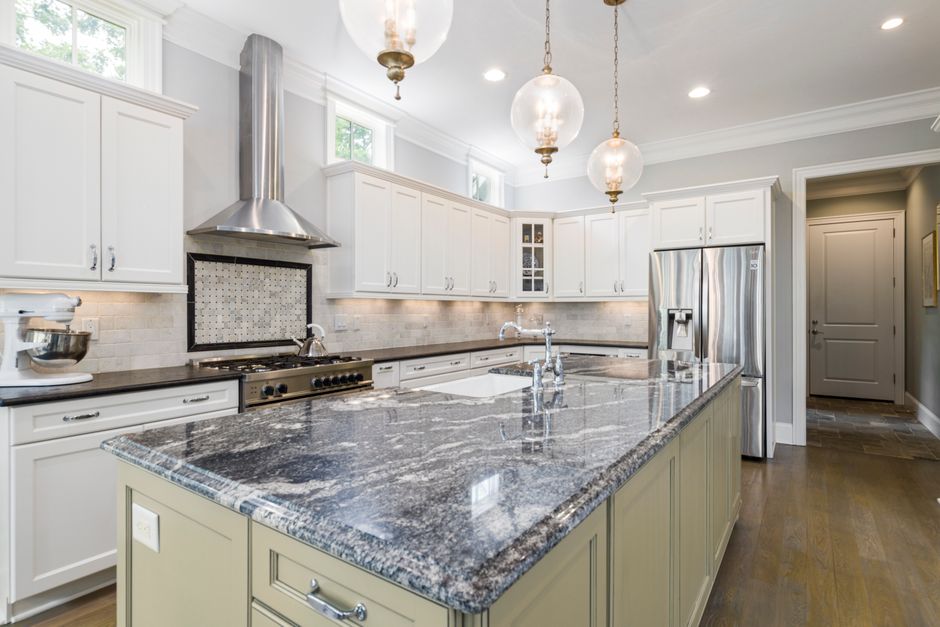
Granite is a natural stone formed over millions of years from cooled magma. Each slab is unique, offering variations in veining, flecks, and color patterns that many homeowners find appealing. Granite is known for its hardness and resistance to heat, which makes it a popular choice for kitchens where heavy cooking takes place.
Because granite is a natural material, it is porous and requires periodic sealing to prevent liquids from penetrating the stone. The frequency of sealing depends on the specific type of granite and how much it is used. Some slabs may need sealing every year, while others can go longer. Applying a sealant helps maintain the stone’s appearance and protects against staining, especially from acidic substances like lemon juice or vinegar.
Daily cleaning for granite should be done with a pH‑neutral cleaner or mild dish soap. Abrasive cleaners or acidic solutions can damage the sealant and etch the stone over time. Granite can withstand hot cookware directly placed on its surface without damage, which is an advantage for many cooks. However, the stone can chip if struck forcefully, so care is still needed. Granite prices vary widely depending on the rarity of the stone and its origin, generally ranging from moderate to high.
Marble Countertops
Marble is a metamorphic limestone that has been used for centuries in sculpture and architecture. Its distinctive veining and soft, luminous appearance create a classic look that many associate with luxury kitchens. However, marble is a softer and more porous stone than granite, which introduces practical considerations for everyday cooking spaces.
Marble reacts readily with acidic substances such as citrus, tomatoes, and vinegar. Even brief contact can cause etching, which appears as dull, whitish marks on the polished surface. These etchings can sometimes be reduced by honing the surface, but they are considered part of the patina that some homeowners appreciate. Staining is also a concern because marble absorbs liquids easily. Sealing can help, but it does not make the stone entirely stain‑proof.
Because of its softness, marble can scratch or chip more easily than other countertop materials. Cutting directly on a marble surface is not recommended. Heat resistance is moderate; while marble does not burn, very hot pans can cause thermal shock or discoloration. Marble typically requires more frequent maintenance than quartz or granite. Its cost is generally high, with rare varieties commanding premium prices. For those who value aesthetics over low maintenance, marble remains an attractive option.
Solid Surface Countertops
Solid surface countertops are man‑made materials composed of acrylic or polyester resins mixed with mineral fillers and pigments. Brands such as Corian have popularized this category. One of the defining features of solid surface is its seamless appearance, as seams can be sanded and polished to become nearly invisible. This makes it possible to create integrated sinks and backsplashes without visible joints.
Solid surface materials are non‑porous, which means they resist stains and do not require sealing. They are also repairable; minor scratches, burns, or cuts can be sanded out with fine‑grit sandpaper, restoring the surface to its original condition. This repairability is a distinct advantage over stone materials, where damage often requires professional intervention.
Heat resistance is lower for solid surface compared to natural stone. Direct contact with hot cookware can cause melting or discoloration, so trivets are necessary. While solid surface is durable against everyday wear, it can be scratched more easily than quartz or granite. Sharp knives should not be used directly on the surface. Cost for solid surface materials is generally lower than natural stone options, placing it in the moderate range. This combination of repairability, seamless design, and affordability makes solid surface a practical choice for many modern kitchens.
Factors to Consider When Choosing
When evaluating countertop materials, it is helpful to consider the overall lifestyle and usage patterns of the household. Kitchens that are used for heavy cooking with frequent hot pots and pans may benefit from the heat resistance of granite or quartz. Households with young children or high traffic might prioritize the ease of maintenance and repairability offered by solid surface or quartz.
Budget is another key factor. Natural stone materials like marble and high‑end granite typically carry higher material and installation costs. Engineered materials such as quartz and solid surface often provide a more predictable price range. It is also important to factor in long‑term maintenance expenses, such as sealants or professional resurfacing, which can add to the overall cost of ownership for certain materials.
Aesthetic preferences also play a role. Those who value unique, natural variations may gravitate toward granite or marble. Those who prefer a uniform appearance with controlled coloration might choose quartz or solid surface. Visiting slab yards or showrooms to see full‑size samples in person can provide a better sense of how each material interacts with natural light and cabinetry.
Ultimately, the best choice depends on balancing these factors against personal priorities. Consulting with kitchen designers or fabricators can provide further insight into how each material behaves in a specific installation environment. No single material is suitable for every situation, and understanding the trade‑offs helps ensure a decision that aligns with both immediate needs and long‑term expectations.